Clean Mechanical Grid Anchoring & Energy Storage
Delivering continuous physical inertia (H-constant) and zero-degradation energy balancing for modern power grids.
The Active Parallel Force Extractor®
The Problem
As coal and gas plants are phased out, national power grids are losing the physical spinning mass required to maintain frequency stability. Wind, solar, and chemical batteries cannot provide real physical inertia, leaving grids vulnerable to severe volatility.
The Technology:
APFE® - OGPEG’s Active Parallel Force Extractor (APFE®) is a patented 30-year clean mechanical asset designed to solve the grid inertia crisis. Operating along an engineered sloped track, the system uses staggered multi-mass momentum to deliver continuous physical grid anchoring without chemical batteries or fossil fuels.
How It Works
One-Time Startup Charge: Draws a brief 2-revolution grid startup charge to reach kinetic equilibrium, eliminating heavy ongoing recharge penalties during operation.
Active Energy Recovery: Recycles continuous kinetic braking energy across every revolution and captures off-duty motor power via supercapacitors during track resets, cutting operational motor power draw by up to ~50% (~40.05% in baseline models).
Zero Capacity Decay: Operates across millions of cycles over a 30-year lifespan with zero chemical degradation or fire risk.
Protected IP
Backing this architecture is our patented control stack - integrating real-time kinetic recovery, dynamic load resetting, and electromagnetic guidance. Validated by our Proprietary IP portfolio and our custom 60 Hz Python Digital Twin.
The Engineering Shift: Beyond Single-Weight Drops
Legacy gravity storage relies on dropping a single weight straight down. We run staggered weights along a sloped track to maintain continuous, uninterrupted momentum.
The Problem with Legacy Gravity Systems
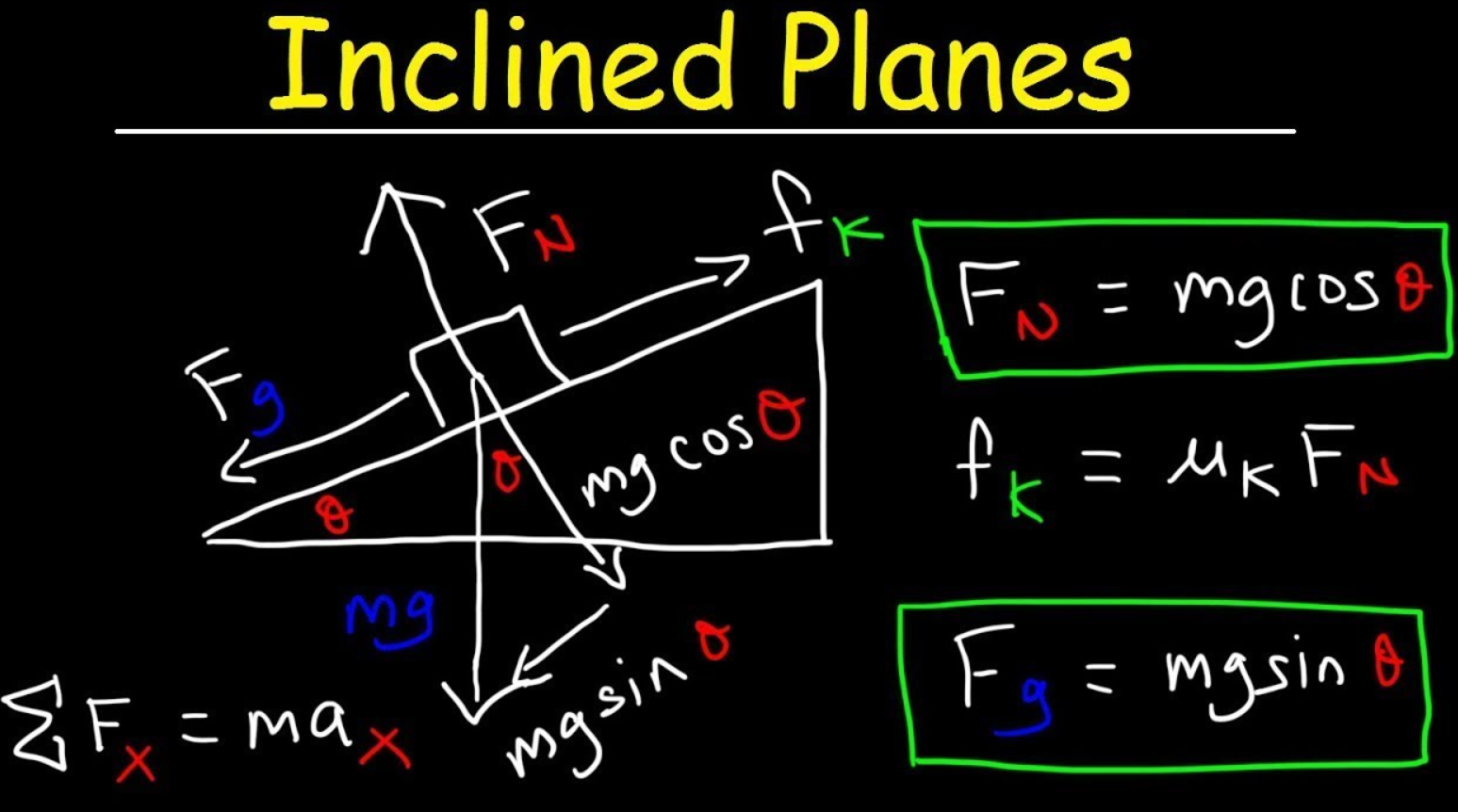
Standard gravity concepts (mgh) operate on a stop-and-start loop:
- They lift a massive weight vertically, drop it straight down to generate a short burst of power, and then drain heavy grid energy to drag it back to height.
- This creates severe startup torque spikes, heavy structural shock loads, and unrecovered braking waste.
The APFE® Advantage
OGPEG completely rewrites this approach. Instead of treating gravity as a single vertical drop, APFE® treats it as a continuous sloped loop (sin θ):
- Continuous Torque Transfer: An interconnected loop of staggered weights moves along a sloped track (± 30° angles), eliminating mechanical dead zones and providing smooth, unbroken rotation.
- Active Energy Scavenging: By recycling kinetic braking and using supercapacitors (DPES) during track resets, the system reduces peak motor power demand by up to ~50% (~40.05% in our baseline model) while maintaining physical grid stability (H-constant).
The £250M Grid Vacuum: Why NESO Needs Physical Inertia
Retiring coal and gas plants has stripped the UK grid of physical spinning mass. GMEG-Zero restores true grid stability without relying on chemical batteries or fossil fuels.
The Grid Inertia Crisis
As coal and gas plants are decommissioned, the grid loses its natural mechanical heartbeat - the physical synchronous inertia (H-constant) needed to absorb sudden frequency shocks.
NESO spends hundreds of millions every year trying to keep frequency stable, often relying on battery inverters that provide synthetic signals rather than true physical spinning inertia.
The Solution: Utility-Scale Mechanical Anchors
GMEG-Zero fills this critical infrastructure gap:
- Real Physical Inertia: Acts as a continuous mechanical anchor, delivering true synchronous rotating mass (H-constant) to instantly stabilise grid frequency.
- Centralised Hub Deployment: Built as modular, multi-hundred MW regional plants at key grid nodes and DNO sub-stations.
- Bankable Revenues: Monetized through high-margin NESO grid-stability contracts, direct PPAs, and balancing market revenues - shielding assets from spot-market price volatility.
Patented IP & Compact Land Footprint
Confirmed UK IPO patent claims, 30-year asset lifespan, and ultra-high spatial efficiency.
Proven & Examiner-Validated Technology
The Active Parallel Force Extractor (APFE®) is backed by solid intellectual property. Our core multi-mass architecture was evaluated under accelerated UK IPO Green Channel examination, with senior examiners officially confirming our primary claims as definitely inventive.
Unmatched Spatial Efficiency
- Ultra-Compact Footprint: Requires just 270m²/MW - compared to up to 120,000m²/MW for wind generation - allowing high-density modular scaling at constrained substation nodes.
- 30-Year Asset Life: Built with pure mechanical engineering, delivering zero chemical degradation or capacity loss over decades of continuous operation.
- Sovereign IP Ownership: Protected by 4 UK IPO patent filings (1 granted, 2 under Intention to Grant under Section 18(4), and 1 awaiting accelerated publication) and 3 registered trademarks (APFE®, GMEG®, CAGMI®).
Our Patented 5-in-1 Control Stack
A synchronous control loop designed to recycle internal energy, eliminate shock loads, and cut motor power draw by up to ~50% (~40.05% in baseline model).
The 5 Synchronised Subsystems
0.1 Active Parallel Force Extractor (APFE®) - Primary Torque Drive
Captures continuous rolling acceleration as weights move along a rounded rectangular sloped track, delivering smooth, steady rotational torque to the main drive shaft.
02. Kinetic Energy Transfer System (KETS) - Velocity Control
Monitors mass momentum in real time. It acts as an automatic speed regulator, harvesting extra kinetic energy during overspeed phases and feeding it back into the loop to keep rotation smooth.
03. Dynamic Load Lifting System (DLLS) - Track Reset Motors
Dual-action motors that dynamically tilt the track at timed intervals, bypassing static friction and eliminating mechanical drag during weight resets.
04. Dynamic Power Exchange System (DPES) - Supercapacitor Energy Scavenging
Sub-second supercapacitors that capture off-duty motor power during track resets, feeding it directly back to reset motors to drastically cut peak motor draw on the internal loop.
05. Inertial Energy Recovery System (IERS) - Spring Inertia Buffering
Spring-bank absorption zones that cushion track resets by bringing the track to a soft close, eliminating mechanical shock loads and releasing stored spring energy to kick-start the next cycle - further reducing motor energy demand during resets.
Custom 60 Hz Digital Twin & De-Risked Engineering
A custom physics engine tracking 61 variables at 1/60th of a second, backed by fast-tracked UK IPO patent filings.
Built From First Principles
Off-the-shelf software cannot model multi-mass vectors along a dynamically tilting track. To validate our physics before building physical pilots, we built a custom 60 Hz Python/LaTeX Digital Twin - modelling continuous gravitational force (Fp = mg sin θ), mechanical friction, and energy conservation across every microsecond of operation.
Real-Time Physics Engine
- High-Frequency Resolution:
Runs at 16.667ms time-steps, calculating over 199,000 data points per dual-revolution loop. - 61 Live Telemetry Variables:
Tracks spatial dynamics, torque vectors, and energy balance across 3 live dashboards. - De-Risked Pilot Fabrication:
Models microsecond mechanical forces to size carbon fibre parts and motor specs - removing guesswork before physical manufacturing.
Core IP Highlights
- UK IPO Patent Validation:
4 patent filings submitted under the accelerated Green Channel. Core claims evaluated with senior UK IPO examiners officially confirming primary claims as "definitely inventive". - Registered Trademarks:
Trademarks secured for APFE®, GMEG®, and CAGMI®. - Global Defense Strategy:
International PCT filings mapped to secure mechanical, algorithmic, and control-stack priority across target European and global energy markets.